
Replacing a tooth from the root up
Dental Implants
An implant replaces a missing tooth from the root up. A small titanium post is placed into the jawbone, the bone grows onto it, and a crown is fitted on top.
Why replacing a missing tooth matters
A gap is not only an appearance problem. When a tooth is lost:
- The teeth either side gradually tilt into the gap
- The opposing tooth drifts down or up out of its position
- Chewing shifts onto the other side of the mouth
- The jawbone where the root used to be slowly shrinks, because nothing is stimulating it
The bone loss is the part people do not expect, and it is the reason we would rather discuss replacement sooner than later.
What makes an implant different
A bridge is supported by the teeth either side, which usually have to be trimmed down to carry it. A denture rests on the gum.
An implant stands on its own in the bone. It does not involve cutting down healthy neighbouring teeth, and because it transmits force into the jaw, it helps preserve the bone.
What happens, step by step
- Assessment. We examine you and take X-rays to measure the bone and check what is nearby. Not everyone is suitable, and we will say so honestly.
- Placement. Under local anaesthetic, the post is placed into the bone. Most people are surprised by how straightforward this is compared with an extraction.
- Healing. The bone fuses to the implant over roughly three to six months. A temporary tooth can usually be provided for the gap in the meantime.
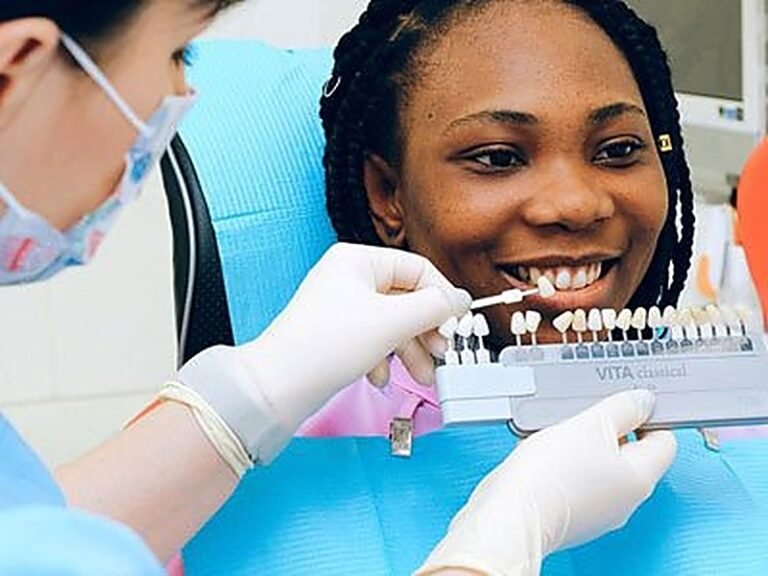
- The crown. Once fused, an abutment is fitted and a crown is made to match the shade and shape of your own teeth.

Who it suits
Implants work best when there is enough healthy bone and the gums are free of disease. We will treat any gum disease first, because an implant placed into unhealthy gums is likely to fail.
Things that reduce the chance of success include smoking, uncontrolled diabetes, and heavy grinding. None of these automatically rule you out, but they need discussing honestly first.
Looking after it
An implant cannot get decay. It can still be lost.
The gum and bone around an implant can become inflamed and infected in the same way as around a natural tooth, and when that happens the implant can loosen. It needs brushing, cleaning between the teeth and regular check-ups exactly like a real tooth.
Looked after, implants routinely last well over a decade and often far longer.
Common questions
Does it hurt?
The placement is done under local anaesthetic, so you feel pressure rather than pain. There is usually some soreness and swelling for a few days afterwards, which ordinary painkillers manage.
Why does it take months?
Because the bone has to physically grow onto the implant. That biology cannot be rushed, and rushing it is how implants fail.
Can I have all my teeth replaced this way?
Yes. A full arch does not need one implant per tooth; a smaller number of implants can carry a fixed bridge or stabilise a denture that currently moves.
Come and ask
We are open 7AM to 7PM, every day of the week, in Birendranagar-6, Surkhet. Walk in, or message first if you would rather have a set time.