
Cleaning first, whitening second
Teeth Whitening
Whitening uses a bleaching gel to lighten the natural colour of your teeth. It is not the same as a cleaning, and knowing the difference saves people money.
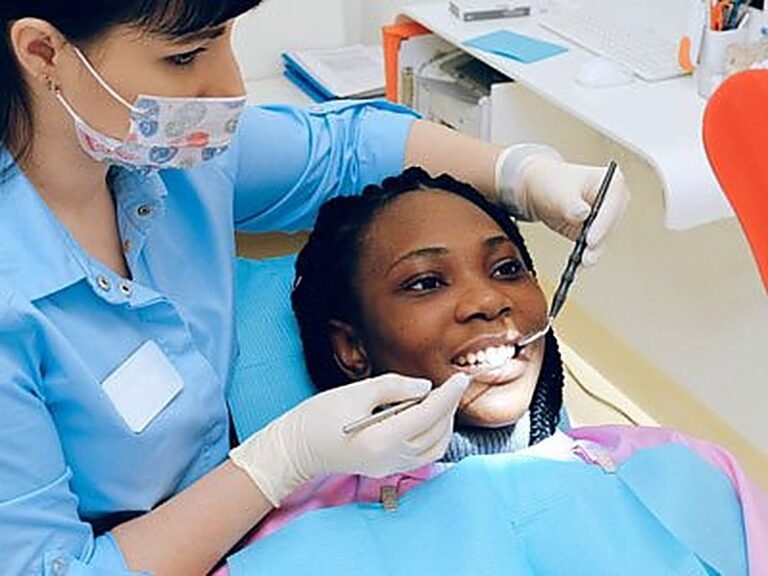
Cleaning or whitening: which do you actually need?
- Scaling and polishing removes surface stain and tartar. It returns teeth to their own natural shade. For many people whose teeth have darkened from tea, coffee, tobacco or simple build-up, this is all that is required.
- Whitening lightens the tooth itself, beyond its natural shade, with a peroxide gel.
We will always clean first and look at the result with you. Quite often people find that is enough, and they stop there. If you still want them lighter, whitening is the next step.
Why teeth darken
- Staining from tea, coffee, red foods, tobacco and betel nut
- Natural ageing, as the darker inner layer of the tooth shows through thinning enamel
- A single tooth going dark after a knock or a dead nerve, which needs different treatment
- Some antibiotics taken while teeth were forming in childhood, which stain the tooth from the inside and respond poorly to normal whitening
That last group matters. If your discolouration is built into the tooth rather than sitting on it, whitening may not give the result you are hoping for. We will tell you this before you spend anything.
What happens
- We check first that your gums are healthy and there is no untreated decay. Whitening over decay or inflamed gums is painful and can damage the tooth.
- We clean the teeth, so the gel works on the tooth and not on a layer of deposit.
- We record the starting shade, so the change can be judged honestly rather than by memory.
- The gums are protected and the gel is applied, or custom trays are made for you to use at home over a set number of nights.
- We review the result and advise on keeping it.

How long it lasts
Usually somewhere between several months and a couple of years. It depends heavily on what you consume. Tea, coffee, tobacco and betel nut will bring the colour back fastest.
Whitening is not permanent for anyone. It can be topped up.
Important limitations
Crowns, veneers and fillings do not whiten. They stay the colour they were made.
This matters most for front teeth. If you have a white filling in a front tooth and you whiten, that filling may end up looking darker than the tooth around it and need replacing to match. We will point out where this applies before you start.
Common questions
Will it damage my enamel?
Whitening carried out properly, at a sensible concentration, does not damage enamel. The risk comes from unsupervised high-strength products and from whitening over existing decay or exposed roots.
Will it make my teeth sensitive?
Often, temporarily. Sensitivity to cold during and shortly after treatment is the most common side effect and settles within a few days. Tell us if you already have sensitive teeth and we will adjust the approach.
What about whitening toothpaste and charcoal?
Whitening toothpastes are mild abrasives that remove some surface stain. They do not bleach. Charcoal products are abrasive and we do not recommend them, as the evidence for benefit is weak and they can wear enamel over time.
Come and ask
We are open 7AM to 7PM, every day of the week, in Birendranagar-6, Surkhet. Walk in, or message first if you would rather have a set time.